Local guides
AlUla Local Guides
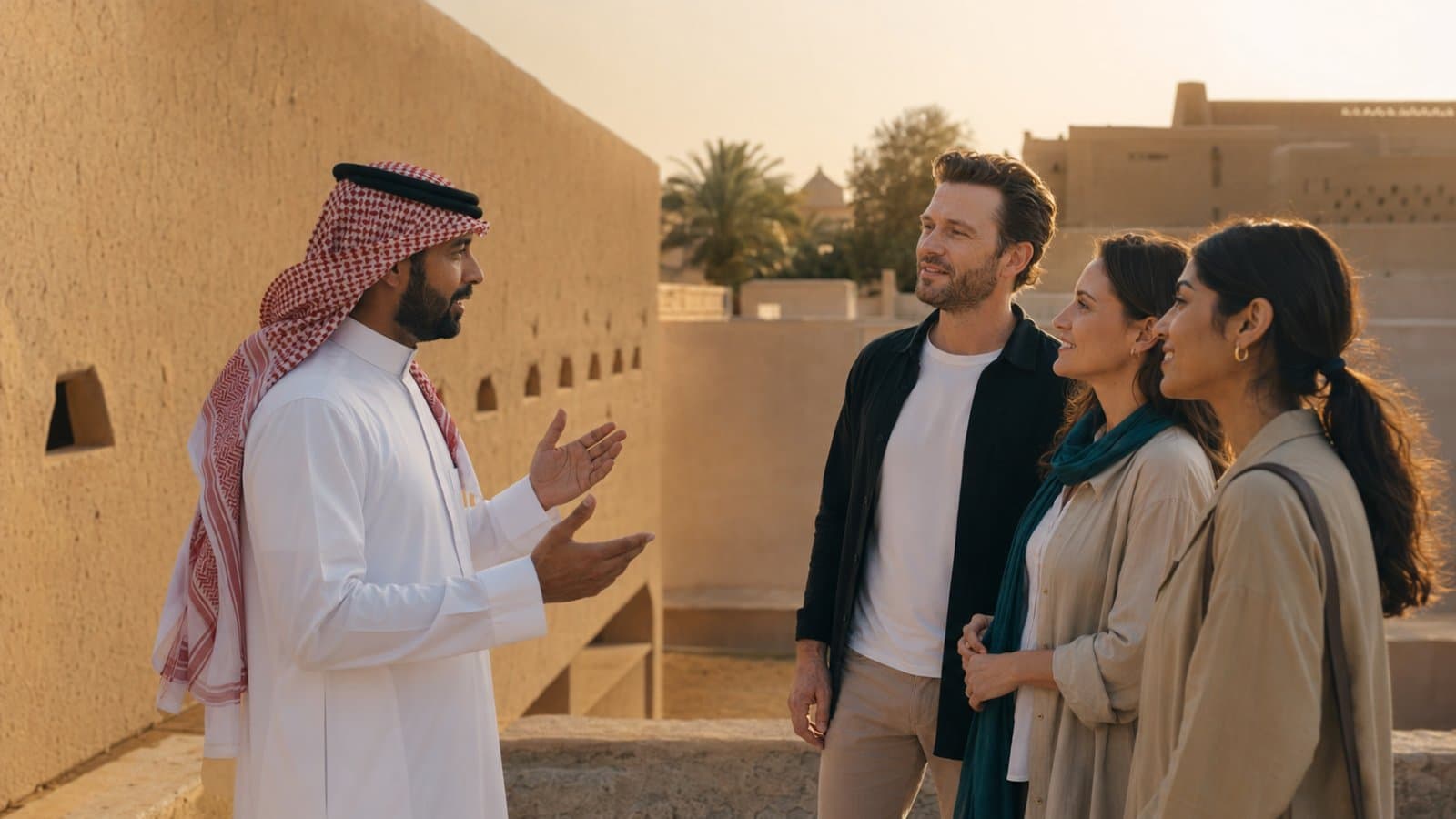
AlUla is one of Saudi Arabia's most distinctive travel experiences because its landscape is not only beautiful; it is layered with memory. Sandstone mountains, oasis farms, ancient inscriptions, Nabatean tombs, restored lanes, and ambitious cultural projects all sit within a desert valley that changes color across the day. Visitors often arrive with Hegra in mind, but the best AlUla trip connects archaeology, geology, living heritage, hospitality, and practical timing. A local guide helps make those connections without rushing through places that deserve quiet attention.
Hegra is the essential starting point. As Saudi Arabia's first UNESCO World Heritage Site, it protects monumental Nabatean tombs carved into sandstone outcrops. The facades are impressive even before you understand them, but interpretation makes the visit richer. A guide can explain how the tombs were commissioned, why inscriptions matter, how Hegra connected with Petra and the wider incense routes, and why conservation rules are strict. The site is not a backdrop; it is evidence of trade, belief, craft, and desert adaptation.
Elephant Rock is simpler at first glance and still unforgettable. The natural formation rises from open sand like a landmark made for sunset. Many visitors can see it without a long explanation, yet timing changes the experience. Heat, wind, event schedules, and light all affect how long you want to stay. A guide can combine Elephant Rock with nearby viewpoints, an evening meal, or a slower photography stop instead of treating it as a quick detour.
AlUla Old Town gives the trip a human scale. Its lanes, houses, market memories, and restored pathways help visitors imagine how oasis life worked before the modern tourism era. Nearby Dadan and Jabal Ikmah add deeper historical layers, with ancient kingdoms, inscriptions, and carved landscapes that reward patient explanation. These places are easy to underread if you move too quickly. A guide helps you see the relationship between water, agriculture, trade, language, and settlement.
Maraya, the mirrored auditorium, shows another side of AlUla. It reflects the surrounding cliffs so completely that the building can seem to disappear into the valley. Even if you are not attending a concert or event, it represents the region's contemporary cultural ambition. A thoughtful itinerary can place Maraya alongside older sites so the contrast feels intentional: ancient routes, oasis memory, and a modern venue shaped by the same desert light.
The best time to visit AlUla is usually October through March. This is peak season because outdoor sites are more comfortable, evenings are lively, and desert light is generous. Shoulder months can work well, but summer needs careful planning, early starts, late finishes, and realistic expectations about heat. A guide can help you decide which sites need booked windows, which stops can be flexible, and when rest is wiser than another transfer.
Getting to AlUla is easier than it used to be. AlUla International Airport serves the destination, while road trips from Madinah can be part of a wider western Saudi itinerary. The road journey has its own rhythm, but it needs planning around distance, fuel, rest stops, and arrival time. If you are combining Madinah, Tabuk, or Red Sea destinations, a local guide or driver can help you avoid unrealistic schedules.
Tour packages in AlUla vary widely. A day trip can work if you have one clear priority, such as Hegra plus a sunset stop, but it will feel selective. Two or three days allow a fuller mix: Hegra, Dadan, Jabal Ikmah, Old Town, Elephant Rock, oasis time, food, viewpoints, and perhaps stargazing or a desert activity. Multi-day guiding is often better for travelers who want interpretation rather than transportation only.
A local guide adds value because AlUla is a place of context. The rock formations are beautiful, but the stories behind tombs, scripts, farms, and trade routes are what make the visit stay with you. The right guide can manage booked entries, explain what you are seeing, choose calmer times, and help you respect protected sites. AlUla is not a destination to skim. It is a destination to read slowly.
Different travelers need different AlUla plans. Photographers often want soft light at dawn or sunset and enough time to wait for shadows to move across the rock. Families may prefer shorter site visits, easier transfers, and a clear meal plan. History-focused travelers usually benefit from a route that links Hegra, Dadan, Jabal Ikmah, and Old Town in a sequence that builds understanding instead of scattering facts. A guide can help decide where to slow down and where a brief stop is enough.
Practical details matter as much as inspiration. Some experiences depend on official time slots, seasonal operations, or conservation rules. Restaurants and event venues can change availability during festivals. Desert roads, parking, and transfers may take longer than the map suggests. Share your arrival time, hotel location, mobility needs, and must-see sites before booking. The more your guide knows in advance, the easier it is to shape AlUla into a calm route rather than a list of rushed reservations.
What to plan in AlUla
Visit Hegra with context on Nabatean tombs, inscriptions, preservation rules, and the wider incense-route story.
Time Elephant Rock, Old Town, Dadan, and Jabal Ikmah around light, heat, and booked entry windows.
Compare day trips and multi-day guiding when you want archaeology, desert scenery, food, and stargazing.
Use a local guide to understand what can be self-guided and what benefits from deeper interpretation.
Plan arrivals through AlUla airport or the road from Madinah with practical transfer advice.
Top guides in AlUla
Page 1 of 1
Sultan Al-Harbi
AlUla
AlUla native guide with deep knowledge of Hegra (Madain Saleh), ancient Nabataean history, and desert stargazing experiences.
Ahmed Khalid
AlUla
Passionate guide with 8 years of experience exploring AlUla's ancient wonders. I specialize in Nabatean history and hidden desert trails that most tourists never discover. My tours combine deep historical knowledge with adventure — expect to climb, explore, and be amazed.