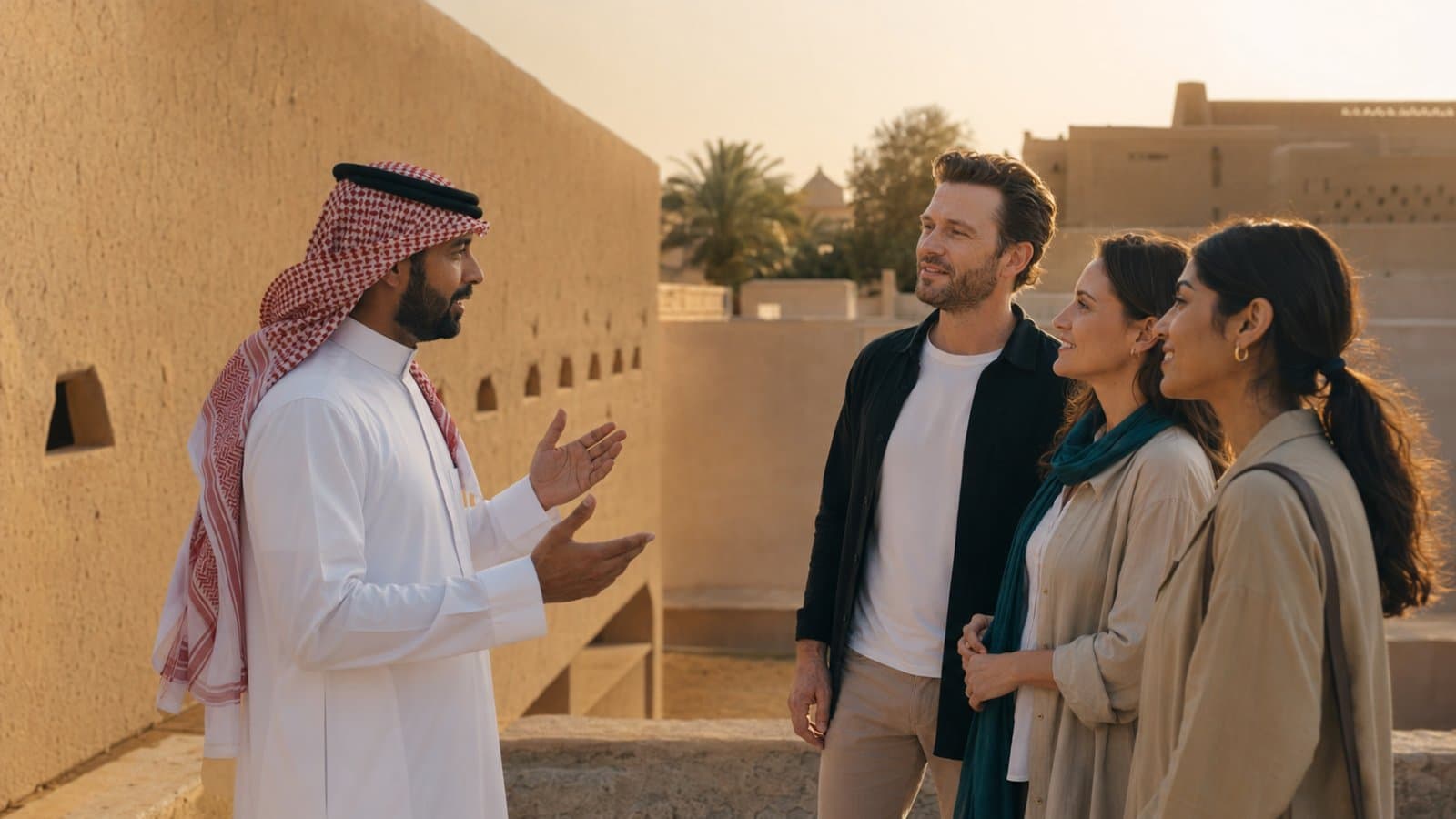
Local guides
Dammam Local Guides
Dammam is the gateway to Saudi Arabia's Eastern Province — the oil heartland that built the modern kingdom and the coast that reaches across the Persian Gulf toward Bahrain and Iran. It is by far the largest city of the Eastern Province and, with its sister cities Khobar and Dhahran, anchors a metropolitan area of more than four million people. For the visitor, Dammam is best understood as a working city with a long industrial story, a serious beach culture that surprises first-time visitors, and a food scene shaped by oil-era migration from across South Asia, the Levant, and East Africa.
The corniche is the obvious starting point. Stretching along the Gulf for roughly twelve kilometers, the Dammam corniche links beaches, family parks, fishing piers, traditional dhow harbors, and a long string of seafood restaurants where the kitchens face the catch coming in. Mornings here are joggers and dawn fishermen; afternoons fade into family picnics; evenings come alive with Saudi families taking the air and food trucks that set up after sunset. A walk along the corniche from the King Fahd Park to the Marjan Island lights gives you the city's daily rhythm in one stretch.
The serious surprise of Dammam is its beach culture. Half Moon Bay (Half Moon Beach), about thirty kilometers south of the city, is one of the calmest and most family-friendly beaches in the kingdom. The water is shallow, the bottom is clean sand, and the cluster of beachfront resorts and chalets offer day-passes that include water sports, kayaks, and jet skis. For a more rugged experience, the offshore islands — Tarout, with its centuries-old fortress and pearl-diving heritage, and the smaller stops along the Gulf — show a different side of Saudi maritime life. A guide can also take you out on a traditional dhow for a half-day on the water, with the option to stop at one of the seafood-grilling spots that locals know.
Dammam's history is recent in the deep-time sense — the city as we know it grew up around the oil discoveries of the 1930s and 1940s — but the human story of the coast is much older. Tarout Island was a center of Bronze Age trade, and its fortress was built and rebuilt across the Portuguese and Ottoman periods. The pearl-diving economy that defined the Gulf for centuries left its mark on the families and food of the region; many of the older residents trace their grandfathers back to dhows that worked the pearling banks before oil. A guide who knows the Eastern Province histories can connect Tarout, the old Qatif neighborhoods, and the modern oil museum in Dhahran into a single coherent day.
The food in Dammam reflects the multicultural workforce that built the oil industry. Indian biryanis, Pakistani karahis, Lebanese mezze, Egyptian koshari, and Filipino seafood dishes coexist with the Saudi staples of kabsa, mandi, and grilled hammour. The Saudi seafood culture is at its strongest here — hammour (grouper), zubaidi (silver pomfret), and shrimp from the Gulf appear on most local menus, often grilled simply and served with rice and a tamarind-onion sauce that is regional. The morning fish market at Dammam port is where chefs and restaurateurs go before sunrise; a guide can arrange a market visit and a cooking lesson with a local family if booked in advance.
Practically: King Fahd International Airport (DMM) is the largest airport by area in the world and serves direct flights from across the Gulf, South Asia, and Europe. The drive from Riyadh takes about four hours on the well-maintained highway; the train option (SAR Mashaer) connects Riyadh and Dammam in about three and a half hours, often the easier choice. Within the city, ride-share apps work well, but for the offshore islands and the King Fahd Causeway crossing into Bahrain a private vehicle is essential. The best months to visit are November through March; June through September brings extreme heat and high humidity that limit outdoor time. A guide based in Dammam typically speaks Arabic, English, and often Urdu or Hindi reflecting the diaspora communities, and knows which beaches require permits, which fishing piers welcome visitors, and how to time the dhow trips around tide and sunset.
What to plan in Dammam
Walk the Dammam corniche from King Fahd Park to Marjan Island, with seafood-grilling stops at the working fishing piers in between.
Spend a half-day at Half Moon Bay or take a private dhow trip to the offshore islands for a calm-water Saudi beach experience.
Visit Tarout Island for the medieval fortress, the pearl-diving heritage, and a quieter look at Eastern Province history.
Time a sunrise visit to the Dammam fish market and arrange a Gulf-seafood cooking lesson with a local family.
Combine the Aramco-era oil heritage in Dhahran with the older Qatif neighborhoods for a day that spans 80 years of regional change.
Top guides in Dammam
Page 1 of 1